
An Interview with Maluleke Lloyd: Reflections from His US Art Residency
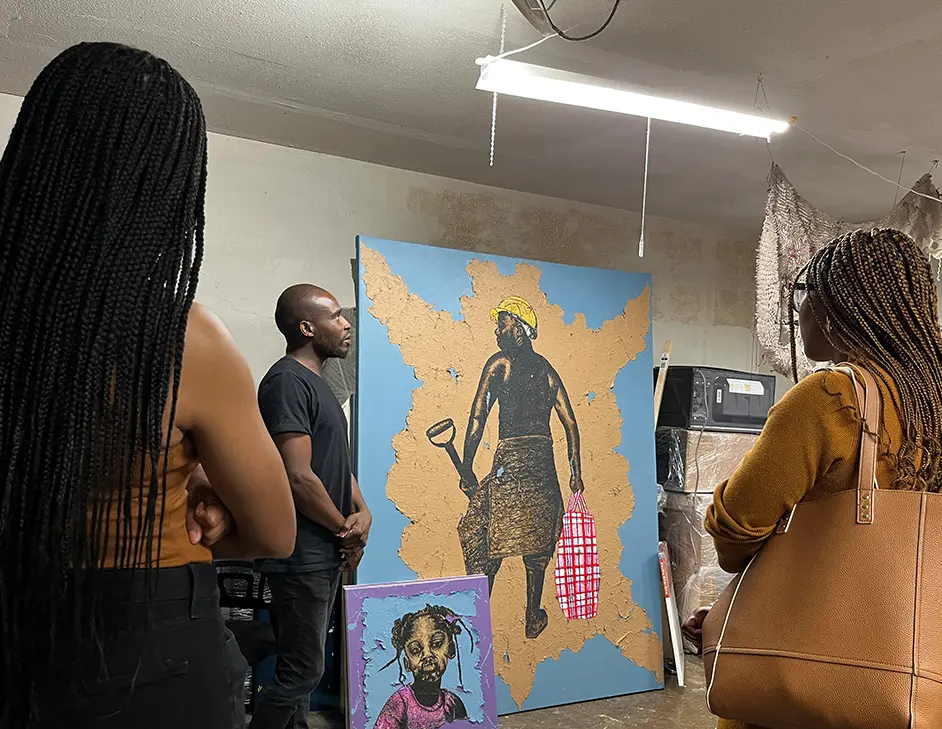
From Dallas to home, Maluleke Lloyd’s US art residency was more than a change of location — it was a creative awakening. Immersed in a culture of collaboration and bold expression, the experience pushed him to think bigger, trust his voice, and reimagine what his next chapter could be.
1. What took you to the US, and how did this journey begin?
I went to the US through the Indibano Art Residency — a three-month programme that’s still continuing this year. What people don’t always know is that the journey actually started back in 2020, but I only managed to go last year. Finally making it there felt surreal. It was an incredible experience, and I’m really excited to share what it meant for me.
2. Where were you based, and what were your first impressions?
I was based in Dallas, Texas. Flying in from South Africa, with a connection in London, I was honestly blown away by the warm welcome from the Dallas art community. One of my first moments was seeing artworks I had only ever read about in school — that was surreal and deeply inspiring. The level of creativity and innovation among my peers was on another level.
3. What did a typical day during the residency look like?
My days were pretty packed. The residency had a structured calendar that balanced exploration and studio time. We spent a lot of time visiting museums, attending exhibitions, and connecting with other artists across Dallas. Time flew — there was so much inspiration everywhere. We also had dedicated studio sessions where we refined our projects and received feedback from mentors and peers. It was productive, intense, and incredibly inspiring.
4. What surprised you most about living and working in the US?
First of all — the time difference. That adjustment was tougher than I expected. The food was also very different from what I’m used to. But the biggest surprise was just how much art there was everywhere. It was inspiring, but also a bit overwhelming. Being surrounded by that level of creativity really pushed me to raise my own standards.
5. Was there a moment where you felt, “This is very different from home”?
Definitely. The sense of community in Dallas really hit me. People genuinely lift each other up. We have an incredible art scene back home, but in Dallas there’s something special about how artists show up for one another. Back home things can sometimes feel more compartmentalised — that love-and-hate dynamic. In Dallas, art feels woven into everyday life, and experiencing that was powerful.
6. How did the residency challenge you professionally?
It was a complete game changer. The residency forced me to really hone in on my artistic voice and identity. Being surrounded by talented peers and mentors who genuinely believed in me taught me to trust my own vision. It wasn’t easy — it was a grind — but it made me more focused and intentional. Connecting with my identity as an artist in that way is something you can’t do alone. You need people who understand art and truly believe in you.
7. What unexpected skills or perspectives did you gain?
It opened my eyes to the power of mixing things up. I’ve always been strong in one technique, but being in the US showed me that blending styles and approaches is where real magic happens. Why stick to one thing when you can combine them? It felt like I was finding my own movement — breaking away from traditional boundaries and exploring something fresh. That was an unexpected but exciting outcome.
8. Did working in the US change how you approach your craft?
Eish — big time. It made me think bigger. I’ve got this fire in my belly now. I’m approaching my work with more confidence, even though I know I’m still holding back a bit. My next solo exhibition is going to be epic — people are not ready. The residency shifted my mindset completely. I’m focused on pushing boundaries and sharing my story with the world.
9. What’s the most valuable lesson you’re bringing back with you?
Community and collaboration. In the US, I saw how powerful it is when artists actively share, support, and promote each other’s work. That’s something I want to bring back home. Let’s lift each other up. It’s about building a creative network that challenges and inspires one another.
10. Was there a conversation or moment that stayed with you?
Yes — a conversation about the role of artists as archivists of our time. Art isn’t just about creating something beautiful to sell. It’s about capturing our era, our struggles, our triumphs. We have a responsibility to document and reflect the world around us. That shifted how I see my work. It’s not just art — it’s storytelling with purpose.
11. How did the residency shape you personally?
It taught me that being an artist also means being a role model. Every time I create, I’m inspiring someone — even if I don’t see it. That’s a big responsibility, but it’s also empowering. It pushes me to always bring my best, to stay authentic, and to keep showing up.
12. How would you describe the creative culture you experienced?
It felt like a breath of fresh air — vibrant, welcoming, and supportive. It had its own unique vibe, different from what we’re used to back home, but it’s something I’d love to see more of here. That creative energy was incredibly motivating.
13. Did you find a sense of community there?
Absolutely. From the moment I arrived, I felt welcomed. Being in a new place can be tough, but the people I met made it feel like home. We connected over art, shared struggles, and celebrated wins together. That sense of belonging made the residency even more special.
14. What are you most proud of from the residency?
Seeing people genuinely connect with my work. Creating art is one thing, but when it resonates — when it sparks emotion, nostalgia, even confusion — that’s everything. Art is a conversation, and I’m proud that my work became part of that dialogue.
15. What advice would you give to someone considering a similar opportunity?
Take the leap — and leave the baggage behind. It’s a chance to start fresh, redefine yourself, and grow in ways you didn’t think were possible. No one has preconceived ideas about you, so own it. Explore, experiment, and be bold. What’s the worst that can happen?
16. How do you see this experience influencing your next chapter?
This residency gave me confidence and momentum. My next chapter is about sharing my story on a bigger stage. I’m already preparing exhibition proposals — bigger spaces, more impactful installations, and collaborations. The residency was a catalyst. Now I’m ready to make some noise.