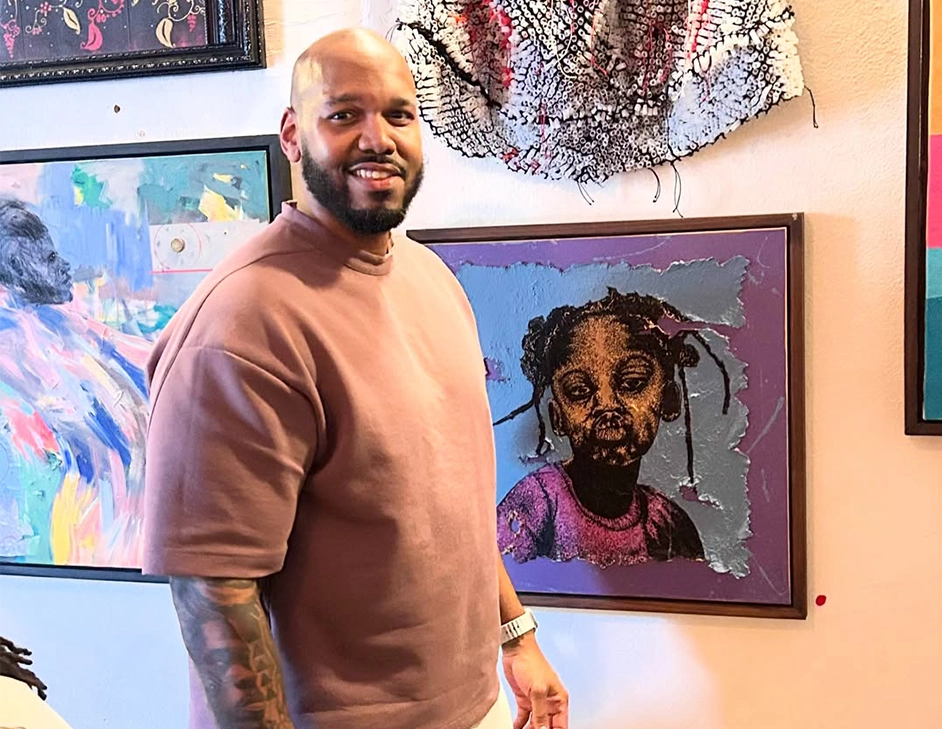
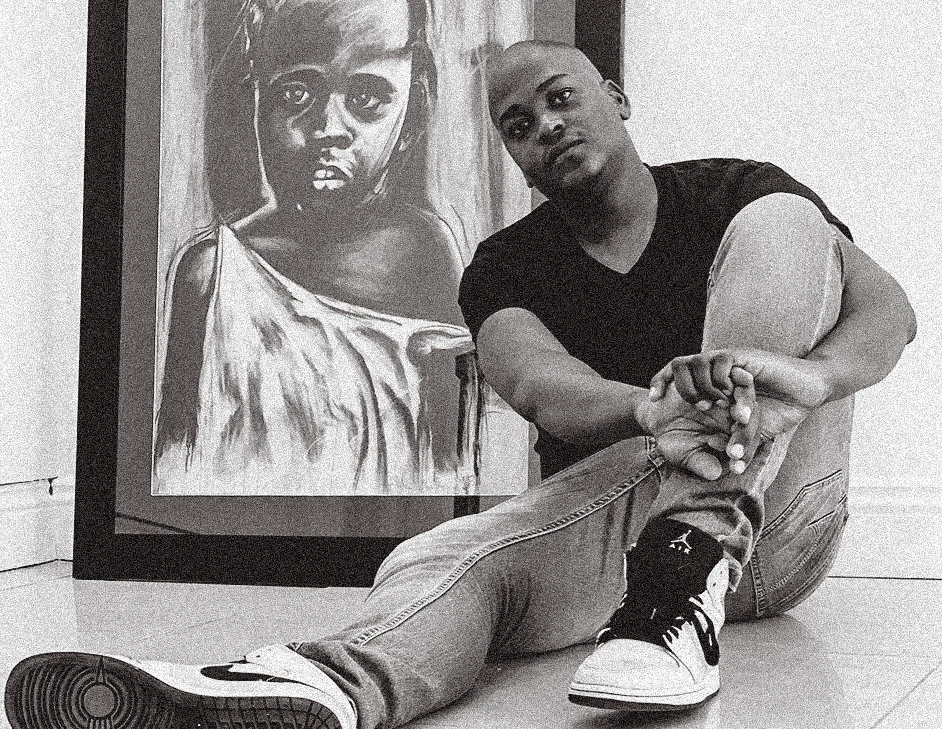
Perspective Art began long before it had a name. Fumani Baloyi reflects on Thomo Village, Shouting Art, Dzunisani’s legacy and the journey towards building a sovereign studio for South African artists.
Act I: The Seed in Limpopo
Perspective Art was founded in 2020, but its foundations were laid almost two decades earlier, in a village school in Limpopo.
In 2002, my mother moved me from a private school to Hanyani Thomo High School in Thomo Village.
I was young, disappointed and resistant to the change.
At the time, I could not imagine that this school would shape my life as deeply as it did. I thought I was leaving opportunity behind. Instead, I entered an environment that expanded my understanding of creativity, community and what achievement could look like.
I never took art as a subject, but art was present.
The school’s art teacher, Mr Mthombeni, influenced how I began to see creativity. Our principal, Mr Hlungwani, celebrated the school’s achievements beyond conventional academics. Whenever he had an opportunity to showcase the school’s best work, art stood proudly alongside the other disciplines.
This was the same school—and the same village—that the respected South African artist Phillemon Hlungwani had attended.
It was also where I first knew of Lloyd Maluleke and Dzunisani. They were older and in higher grades than me. We were not friends then, but we occupied the same environment and absorbed something from the same place.
None of us could have predicted how those early connections would return years later.
The seed of Perspective Art was planted in Thomo Village, long before we had the language, resources or experience to recognise it.
Act II: The First Trial
After matric, I went to university, completed internships and began building a corporate career.
As I gained experience in marketing and digital platforms, my interest in design and art grew alongside it.
Around the time I started Anakanya Media Group, I became increasingly drawn to Dzunisani’s work. I saw an artist producing work with real value, but I also saw the limitations of depending entirely on other people and institutions to present it.
I wanted to build an online channel that we could own.
The initial idea was to elevate Dzunisani’s work through digital platforms and eventually extend that opportunity to other artists.
Dzunisani was working with Happy Mashigo at the time. Happy brought a curatorial and commercial perspective, while I brought my growing understanding of branding, communication and digital infrastructure.
Together, we established Shouting Art in 2016.
Shouting Art became my first practical education in the professional art world. It was also the first website I built.
The platform did not have e-commerce functionality. We were learning as we went, balancing business, creative ambition and the realities of building something without a proven model.
Yet the essential idea had already taken shape:
Artists needed channels that could present their work seriously, communicate their stories and create commercial opportunities without surrendering ownership of the platform.
Shouting Art achieved some early progress, but it did not develop into the business we had imagined. Happy later continued his journey by establishing Obtain Art.
The business may not have endured, but the idea did.
Shouting Art was our first trial. It showed me what digital access could unlock, but it also revealed how much infrastructure, discipline and knowledge the work required.

Act III: The Catalyst — Loss, Legacy and Responsibility
Dzunisani passed away in August 2018.
His passing changed the meaning of everything we had started. What began as an attempt to build visibility and commercial opportunity became a responsibility to preserve a legacy.
Dzunisani and Lloyd had been close friends, and Lloyd had learned a great deal from him. Lloyd also knew about the work we had attempted through Shouting Art.
After Dzunisani’s passing, we confronted urgent questions.
How could we consolidate and archive his body of work?
How could we preserve the stories surrounding it?
How could we establish a responsible commercial channel that might continue creating value for his daughter?
These questions pushed us beyond the idea of simply operating an online art platform.
We began to understand that an artist’s legacy depends on more than the artworks themselves.
It also depends on documentation, provenance, archives, publishing, relationships and the ability to manage how the work enters the world.
Lloyd and I decided to build on the foundations of Shouting Art. In 2020, Perspective Art was born.
From the outset, Perspective Art carried memory and responsibility within it.
We wanted to sell art, but we also wanted to protect context. We wanted to create opportunities, but we also wanted artists to retain dignity, agency and a meaningful connection to how their work was represented.
Dzunisani’s legacy became part of the foundation—not as a marketing story, but as a reminder of why the infrastructure around an artist matters.
Act IV: The Refinement
The years that followed tested the idea.
COVID-19 disrupted the creative sector and slowed our momentum. I was also balancing my corporate career, the development of Akio and the practical demands of sustaining several ambitions at once.
Perspective Art could not always receive the attention it required.
Yet it never disappeared.
Lloyd continued making art. He strengthened his practice, sharpened his identity as a printmaker and remained committed to building a serious artistic and commercial legacy.
His persistence kept the creative centre of Perspective Art alive.
Those quieter years refined us.
They showed us that we did not want to build another online marketplace where artworks appeared as disconnected products. We wanted to remain close to the artist, the process and the story.
We also recognised that technology alone would not solve the problem.
A website could display an artwork, but it could not automatically create trust, context or cultural value. Those things required relationships, publishing, curatorial care and consistency.
At the same time, my professional journey continued to equip me with tools that Perspective Art would eventually need.
Through my work across brand strategy, digital growth, search, web development, technology, e-commerce, data and customer experience, I learned how to connect visibility with commercial systems.
Those capabilities now support the studio. They help us build the structures through which art can be discovered, understood, collected and remembered.
By 2026, we were not returning to the same idea.
We were returning with sharper knowledge, stronger systems and a clearer sense of purpose.
Act V: The Sovereign Studio
In 2026, we adopted the Perspective Art Studios identity and repositioned the business as a studio rather than solely an online gallery.
This shift reflects how we now understand our role.
Perspective Art Studios is a creative and commercial platform for artist collaboration, printmaking, publishing, exhibitions, digital presentation and collecting.
Our platform connects artists, artworks, editorial storytelling, provenance and a considered collecting experience. It allows people to move from discovering an artist to understanding the work and exploring the studio’s current collections.
We have hosted our own concept event, bringing together art, Akio merchandise and Adore Wines in an independently produced creative experience.
We have supported emerging artists, developed direct relationships and created opportunities to present their work professionally.
Lloyd’s journey to the United States—and the acquisition of Joy Joy I through Daisha Board Gallery in Dallas—demonstrated what becomes possible when locally rooted work receives the platform and context to travel.
We may present works by recognised artists, but we do not confuse presentation with direct collaboration.
Our greatest pride comes from working directly with emerging artists.
That is where our purpose becomes most tangible.
We understand what it means to build without inherited access, institutional backing or a guaranteed audience. That experience makes us relatable to the artists we work with and accessible to people who may find the traditional art world intimidating or closed.
Building our own Press Machine
One of Perspective Art’s most important assets is what I call our Press Machine.
The Press Machine is our ability to create, publish and distribute the narrative around the work instead of waiting for another institution to do it for us.
We can build the artist profile.
We can document the artwork and its provenance.
We can publish the interview, record the studio process, develop the exhibition, distribute the story, reach collectors and manage the commercial experience.
Through the Perspective Art Journal, each story contributes to an archive that can grow alongside the artist’s practice.
This is not content for the sake of content. It is cultural infrastructure.
For many emerging Black artists in South Africa, access to this kind of infrastructure remains limited. Recognition often depends on being selected, represented or validated by a small number of established gatekeepers.
Perspective Art seeks to create another route.
Our Press Machine does not replace thoughtful criticism, established galleries or cultural institutions. It gives artists greater capacity to participate in shaping their own narratives while building direct relationships with audiences and collectors.
Self-Sovereignty through infrastructure
For us, Self-Sovereignty does not mean isolation.
Artists still need collaborators, galleries, collectors, publishers and institutions. The goal is not to reject those relationships, but to enter them with greater knowledge and agency.
Self-Sovereignty means maintaining an archive.
It means understanding where the work is placed.
It means documenting provenance, building an audience, protecting the artist’s story and creating commercial pathways that do not disappear when one relationship ends.
Above all, it means owning enough of the infrastructure to keep moving.
Perspective Art exists to help build that capacity.
We want artists to create from a position of greater knowledge, visibility and control. We want collectors to encounter work with context and confidence.
We want emerging artists to see professional presentation not as a distant privilege, but as something they can actively build towards.
Returning to the seed
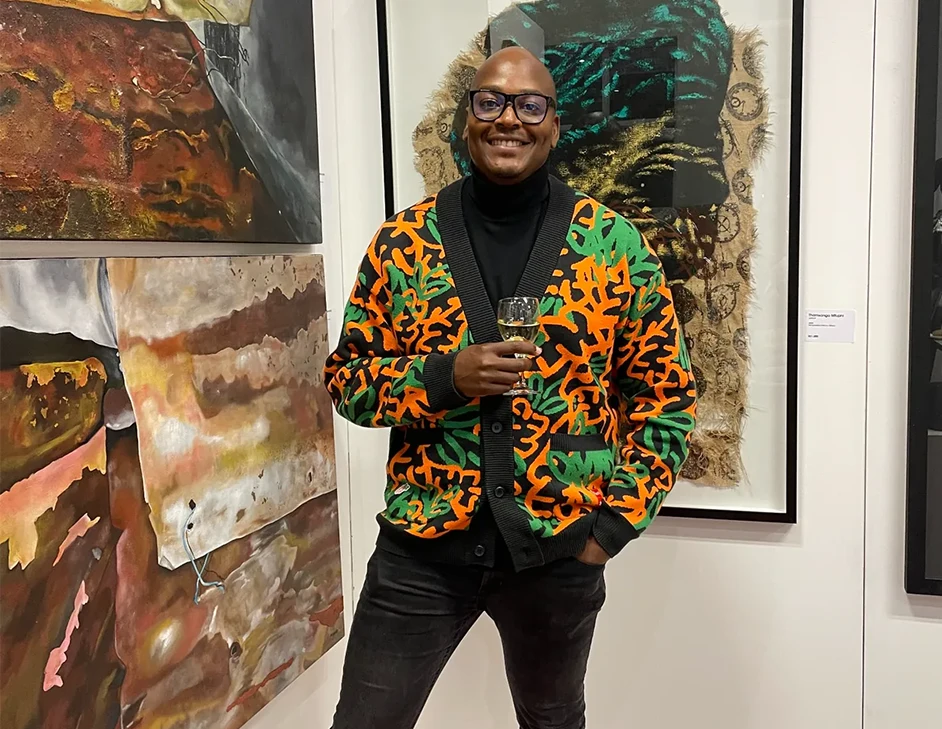
Art, for me, is both a passion and a form of expression.
It is also a way of interpreting life.
It has exposed me to different ways of thinking. It has taught me to look beyond what is immediately visible and to recognise how memory, place and lived experience shape meaning.
Art has also kept hope alive.
Looking back, the move to Thomo Village that I initially resisted became one of the most consequential changes in my life.
I arrived believing that I had been removed from opportunity. Instead, I entered a place that quietly expanded my understanding of creativity, legacy and possibility.
Perspective Art did not begin with a transaction, a website or a registered company.
It grew from exposure, relationships, experimentation, loss, responsibility and persistence.
Today, those experiences converge in a clearer purpose: to build a culturally grounded and commercially capable studio through which South African artists can create, collaborate, document their work and reach collectors.
We are more experienced now.
Our platform is stronger.
Our vision is sharper.
But we are still building on what began in Thomo Village—long before Perspective Art had a name.