
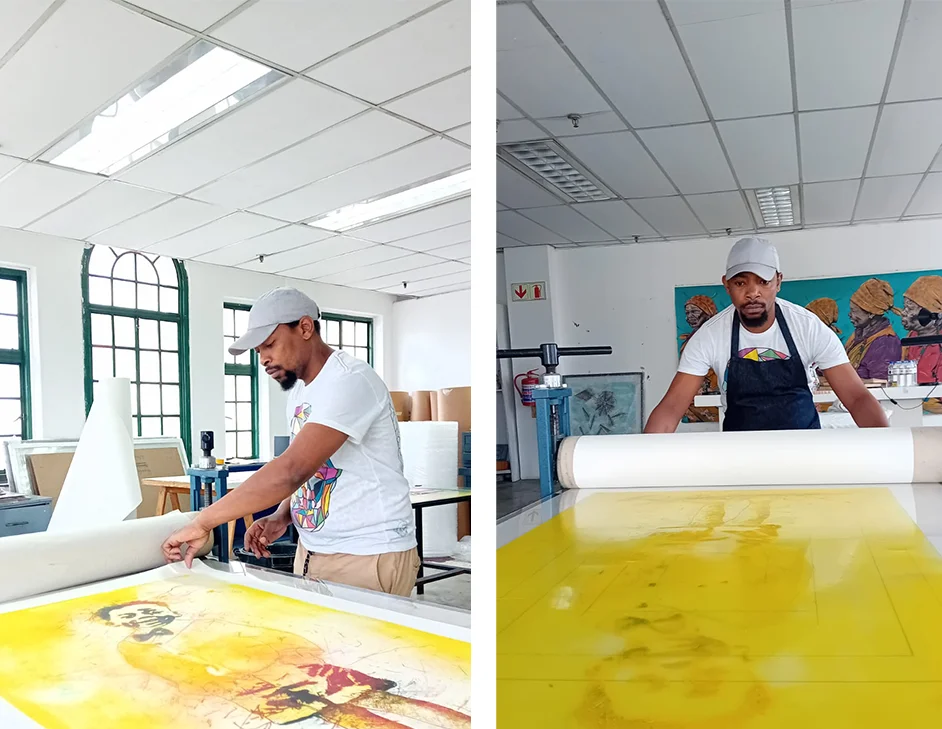
For Golden Child, Lebohang Sithole worked with this demanding technique to create an image that feels delicate, layered and emotionally present. The final print may appear spontaneous, but it is built through patience, control and repeated engagement with the plate.
Drawing directly into the plate
Sithole’s process begins with a sheet of Perspex. Using a sharp needle, he scratches the image directly into its surface, creating grooves that will later hold the ink.
Unlike drawing on paper, each mark made during drypoint becomes part of the printing matrix. The pressure of the hand, the depth of the scratch and the direction of the line all influence how the image will appear once printed.
This gives the work its distinctive texture. The scratched lines create an uneven, tactile quality that cannot be fully separated from the act of making.
Inking, wiping and revealing the image
Once the plate has been prepared, ink is worked across its surface and pressed into the incised grooves. The excess is then carefully wiped away, leaving ink behind within the scratched lines.
This stage requires sensitivity. Too much wiping can weaken the image, while too little can leave the surface heavy and unclear. The final balance determines which marks remain sharp, which areas feel soft and where traces of tone are allowed to stay.
The image is then transferred onto paper using an etching press, where carefully controlled pressure draws the ink from the plate.
Building colour through separate layers
The colour in Golden Child is not applied all at once. Sithole builds the image through three printed layers: yellow first, followed by red and then blue.
Each colour must be aligned with the previous impression. This process, known as registration, ensures that the layers work together rather than shifting apart.
As the colours overlap, new tones and variations begin to emerge. The warm yellow ground gives the work its glow, while the red and blue marks introduce depth, contrast and definition.
The result is an image that feels both restrained and richly worked.
Looking at Golden Child
At the centre of the composition stands a young figure, facing the viewer with a direct but quiet presence. The child is surrounded by scratched, restless lines that appear to move across the surface like fragments of memory or energy.
The figure’s formal clothing suggests care, ceremony and dignity, yet the uneven marks prevent the image from becoming overly polished. Instead, it feels vulnerable and human.
The title Golden Child adds another layer of meaning. It may suggest promise, value, expectation or the way a child is seen within a family and community. The warm colour palette reinforces this sense of preciousness, while the fragile line work introduces complexity beneath the surface.
Technique as part of the meaning
Sithole’s use of drypoint is not simply a technical choice. The slow scratching of the plate, the careful wiping of ink and the repeated printing of colour all contribute to the emotional character of the work.
The image is built through pressure and repetition, but it retains a sense of openness. Its marks remain visible, imperfect and alive.
Through Golden Child, Lebohang Sithole demonstrates how a traditional printmaking process can produce an image that is both technically considered and deeply expressive. The work invites viewers to look beyond the figure itself and consider the layers of identity, memory and expectation carried within it.
